“`html
Understanding the Differences in Bike Wheel Sizes
For cyclists, the world of bike tires can seem as varied and niche as the bikes themselves. Choosing the right tire size can affect your speed, comfort, and handling on different terrains. This guide dives into the differences in bike wheel sizes, explaining everything from standard tire dimensions to performance distinctions. We’ll explore various types of tires such as road, gravel, and mountain bike tires, and examine questions about sizing, tread, and width. This article aims to demystify all the tiresome tire talk and equip you with the essential knowledge to make informed decisions whether you’re upgrading or replacing your bike tires.
Bike tire size chart
Selecting the appropriate bike tire size is crucial for optimal bike performance and safety. A bike tire size chart is a handy reference tool to understand the compatibility between different bike frames and tire sizes. Typically, these charts provide information on standard sizes used in varying types of cycling, such as road biking, mountain biking, and commuting.
It’s important to consider both diameter and width when consulting a tire size chart. For instance, a standard road bike might require a narrower tire than a mountain bike, which might demand larger, more robust tires to handle rougher paths. Familiarizing yourself with these charts enables you to effortlessly switch and select tires that enhance your cycling experience.
Standard bike tire sizes explained
700C bike tires
Among the most popular tires, 700C bike tires are primarily used on road bikes and hybrid bicycles. The “700C” reference comes from an old French tire sizing system and denotes the tire’s diameter. Despite its categorization as 700mm, it is around 622mm in actuality. These tires are lauded for their ability to deliver a balance of speed, efficiency, and versatility on pavement.
They are ideal for cyclists who prioritize their commute or long-distance road riding. If you’re pursuing speed while maintaining a degree of comfort, the 700C is a plausible choice. Understanding the measurement’s paradox helps in identifying compatible tubes and rims, ensuring a smooth and trouble-free ride.
29 inch bike tires
Sharing the same diameter as 700C tires, the 29-inch bike tires are prevalent in mountain biking. Designed for tall frames, these tires are synonymous with enhanced traction and stability on off-road conditions. Their larger size allows riders to navigate debris, rocks, and rough trails with varying topography, with much ease.
Cyclists opting for endurance and variety in rough terrains often prefer these tires. Though heavier than smaller sizes, they help maintain greater speed and overcome obstacles, making them indispensable for those inclined to serious mountain adventures.
27.5 inch bike tires
The 27.5-inch bike tires, also acknowledged as 650B, find a midpoint between traditional mountain bike sizes. They merge the benefits of both 26-inch and 29-inch wheels, offering a balance between acceleration and control. Popularized in recent years, these tires offer increased maneuverability without compromising on the speed factor.
Ideal for agile handling scenarios, the 27.5-inch tires come highly recommended for those seeking a responsive and middle-ground option. With a wide range of tread patterns, these tires enhance versatility across both rough and moderately smooth trails.
650B bike tires
Known interchangeably as 27.5-inch tires, 650B tires align perfectly with gravel and all-road journeys. These tires, smaller than the traditional 29-inch mountain bike tires, indulge in maximizing comfort with less aggressive terrain.
Their broader width is an advantage for casual riders seeking extra cushioning on light trail exploration or urban rides. Embracing a diversity of tire widths, the 650B category ensures compatibility with wider rims, presenting an alternative to traditional setups for adaptive ride features.
26 inch bike tires
Historically the default choice for mountain bikes, 26-inch bike tires lend themselves to nimble and dynamic cycling experiences due to their compact form. Although they are overshadowed by the likes of 27.5 and 29-inch variants today, these tires remain relevant for certain bike types and specific riding purposes.
Favored for expeditions requiring frequent accelerations and turns, their longstanding presence continues to appeal to riders who appreciate an old-school flair with brisk handling capabilities on diverse paths.
Kids bike tire sizes
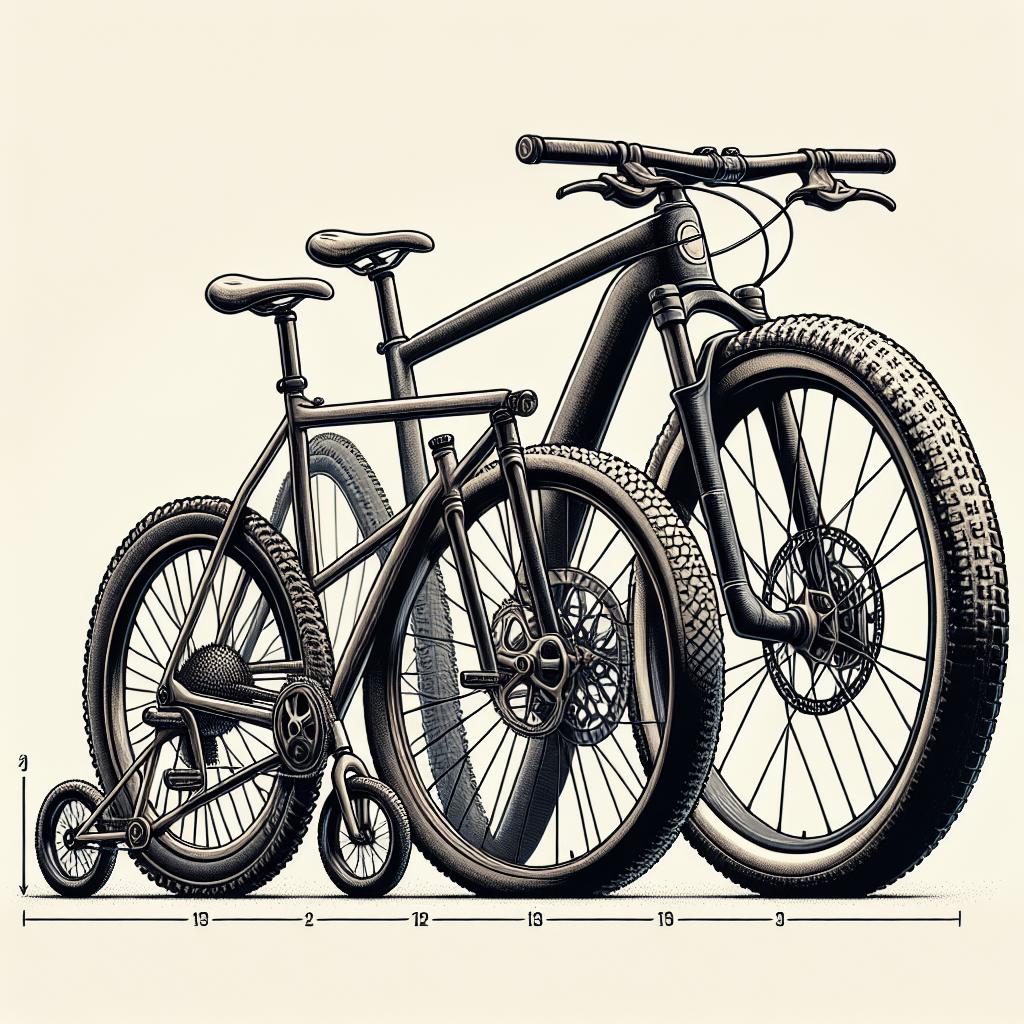
Kids bike tire sizes vary significantly, predominantly ranging from 12 to 24 inches depending on the child’s age, height, and bicycle expertise. Ensuring the right fit is instrumental in building confidence and safety for young riders as they learn balance and form skills.
For startup toddlers to pre-teen adventurers, consulting a size chart specific for kids’ bikes helps in selecting a tire that supports the primary needs of comfort and control to nurture budding biking talents.
Bicycle tires by type
Road bike tires
Lightweight and narrow, road bike tires are crafted to minimize rolling resistance and maximize speed on smooth pavements. They are tailored distinctly for aero dynamics and high-pressure inflation, making them the quintessential choice among competitive and leisure road cyclists.
With lesser tread and focused on performance, these tires excel on well-paved paths. They complement a cyclist’s need for swift rides, characterized by precision and reduced friction, to conquer speedy routes and marathons.
Gravel bike tires
Bridging the gap between on-road and off-road cycling, gravel bike tires accommodate a variety of terrains with finesse. These tires balance wider footprints with moderate tread that permits smooth transitioning from pavement to gravel without compromising necessary grip.
Designed for the adventurous, gravel tire patterns range from slicks to knobbies, empowering riders with versatility for mixed-surface endurance treks while emphasizing both comfort and exploration.
Mountain bike tires
Mountain bike tires are all about toughness and versatility on rugged trails. They come with wider dimensions and deeper treads to tackle roots, rocks, and mud effectively. The focus on durability and grip empowers riders with confidence on tricky terrains.
Depending on the terrain, tire tread and material can vary significantly within this category. Rim diameter, casing material, and tread patterns denote traction and stability that support a range of biking endeavors from trail riding to downhill challenges.
Fat bike tires
Fat bike tires are monstrous with their significantly large and expansive form, designed for specialized conditions such as snow, sand, and loose dirt. With extremely low air pressure capacity, they ensure superior floatation where conventional tires falter.
Enabling peculiar traction and stability for rides across atypical environments, fat bike tires open up a hyped avenue for enthusiasts pursuing winter sports, amended terrains, and recreational biking ventures with authoritative controls.
How do I know my bike tire size?
Knowing your bike tire size is fundamental in maintaining efficient performance and safety. Usually found printed on the tire’s sidewall, the size information consists of numbers that include the tire diameter and width. The standard format is usually the combination of these two measurements.
Understanding the importance of this data helps in finding compatible replacements and ensures you select the correct tubes and rims for repairs. Keeping an eye on these specs can save you from unnecessary complications and enhance ride quality.
Bike tire dimensions: What does 700x40c mean?
The coding 700x40c is integral to deciphering the specification of a bike tire. The initial number, ‘700’, refers to the approximate outer diameter in millimeters, which signifies that it aligns generally with the 700C tire category.
Meanwhile, ’40’ signifies the tire’s width in millimeters, while the ‘c’ references old French sizing systems indicating the tire’s width category. Gaining insight into this nomenclature is key to ensuring tires’ compatibility with frames and intended cycling purposes.
Does bike tire width matter?
Tire width determines how much contact your tire makes with the ground which influences traction, comfort, and rolling resistance. Wider tires tend to provide better grip and comfort over varying terrains because they can better absorb shocks and uneven surfaces.
For road cycling, narrower tires maintain less rolling resistance, translating into swifter speed with less exertion. On the flip side, mountain and gravel bikes may require wider tires that fare better in uneven conditions balancing stability against maneuverability.
Does bike tire tread matter?
Bike tire tread can significantly impact riding performance by affecting traction and control. Smooth or slick tires, primarily used for road biking, are optimized for speed and low resistance on pavements. Conversely, a more pronounced tread is essential for off-road conditions.
Tread-created friction provides the necessary grip to negotiate dirt, mud, and slippery surfaces effectively, essential for mountain and fat bike tires. Selecting the right tread involves assessing your common riding terrains and weather conditions, ensuring enhanced safety and efficiency.
More bike tire FAQs
When should I replace bike tires?
Recognizing when to replace bike tires involves checking for tread wear, cracking, or visible deterioration. If tires begin to lose air frequently or grip worsens, it might be time for replacements to maintain safety and performance.
Routine visual checks and being aware of mileage through cycling apps or logs can help you anticipate tire longevity and make preemptive changes before severe wear impacts your cycling experience.
What are winter bike tires?
Winter bike tires are crafted to provide grip and safety in cold, icy, or snowy conditions. With specialized rubber compounds and deeper treads, they counteract slippage where regular tires might fail.
Some designs even incorporate metal studs for enhanced traction on ice, offering a viable solution for year-round cyclists battling unfavorable weather.
Will a 29 inch tire fit a 700C rim?
Yes, 29-inch tires typically fit 700C rims as they share the same bead seat diameter (622mm). Compatibility, however, hinges on adequate frame clearance and the tire width fitting correctly within your bike’s architecture.
Always verifying clearances is critical to ensure a safe fit, highlighting the importance of consulting your bicycle’s manufacturer guidelines for specific allowance data.
Are 27 inch wheels the same as 700c?
Although similar, 27-inch wheels and 700C are not precisely the same, differing slightly by a few millimeters. The subtle difference might impact compatibility depending on the brake setup and tire clearances.
If replacing one for the other, checking compatibility is paramount to avoid performance issues.
Do bike tires have a direction?
While most road bike tires do not have a specific directional pattern, many mountain and some road tires do have directional treads designed to improve performance based on directionality.
Usually marked by an arrow on the sidewall, it is essential to install directional tires correctly to benefit fully from their designed performance attributes.
How do tubeless bike tires work?
Tubeless bike tires forgo the traditional inner tube setup, relying instead on an airtight seal between the tire and rim. A liquid sealant is typically used to prevent air from escaping, effectively allowing lower tire pressures and puncture resistance.
This system enhances rolling efficiency and grip, providing a smoother ride experience over rough surfaces. Proper installation is crucial, which includes necessary rim tape and valve choices adapted for tubeless configurations.
“`